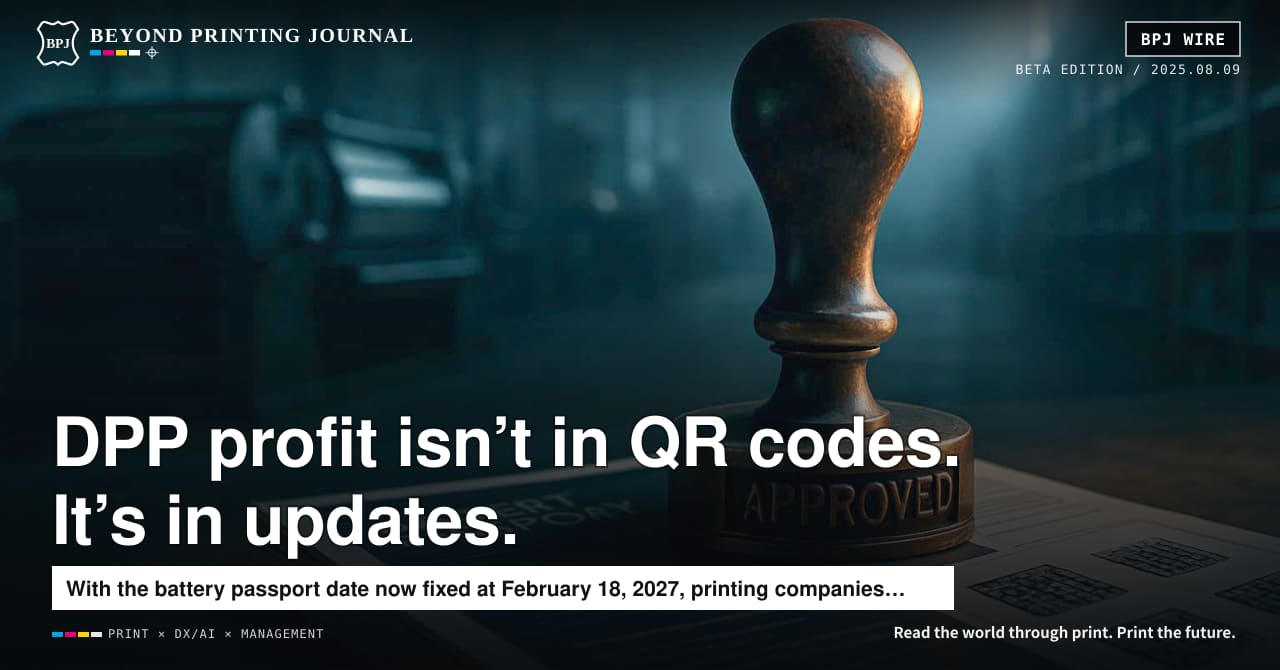
In the DPP gold rush, the money isn’t in the QR code. It’s in whoever runs updates.
With the battery passport date now fixed at February 18, 2027, printing companies need to decide this before they print a single 2D code: who collects the data, who updates it, and who carries the liability when it’s wrong.
On a factory shipping line, the moment even one label’s 2D code can’t be read, that unit’s “passport” effectively doesn’t exist. The EU’s Digital Product Passport (DPP) is not a “put a QR on it” program. It’s a reallocation of work and risk: who creates product data that keeps changing, who maintains it, and who is accountable for mistakes.
Gathered with AI. Thought through on the shop floor. Written for the future of print.
BPJ WIRE: stories selected and drafted by the BPJ desk from world news, fact-checked against the source ledger — published alongside the editor's own picks.
Translated from Japanese by AI. The Japanese original is authoritative.
In July 2026, the EU adopted the implementing act for the DPP Registry, and we can confirm the dates up to the Official Journal publication (adopted July 16, 2026; published July 17, 2026). The key point here is that the registry is not “a box where the EU holds all data.”…
The rest is for members
Read the full article. Our feature reports also carry an archive-grade one-page brief (BPJ VISUAL BRIEF) — every figure with its source.
Already a member? Log in
Sources
Beyond Printing Journal — read the world through print, and print the future.