Why shipments stall at the port: labels and paperwork don’t match
Export deals are often lost not on taste or technology, but on the consistency between labels, inserts, and customs documents. How much should a printing company take on—and where should it draw the line?
When a container gets held at the port, the problem is not always the product inside. A few lines printed on the outside of a box—and a single instruction sheet packed inside—can decide whether an export succeeds. Under “consumer protection,” regulations keep drilling into the details, and for smaller manufacturers, global growth has quietly turned into a business of labels and documents.
Gathered with AI. Thought through on the shop floor. Written for the future of print.
BPJ WIRE: stories selected and drafted by the BPJ desk from world news, fact-checked against the source ledger — published alongside the editor's own picks.
Translated from Japanese by AI. The Japanese original is authoritative.
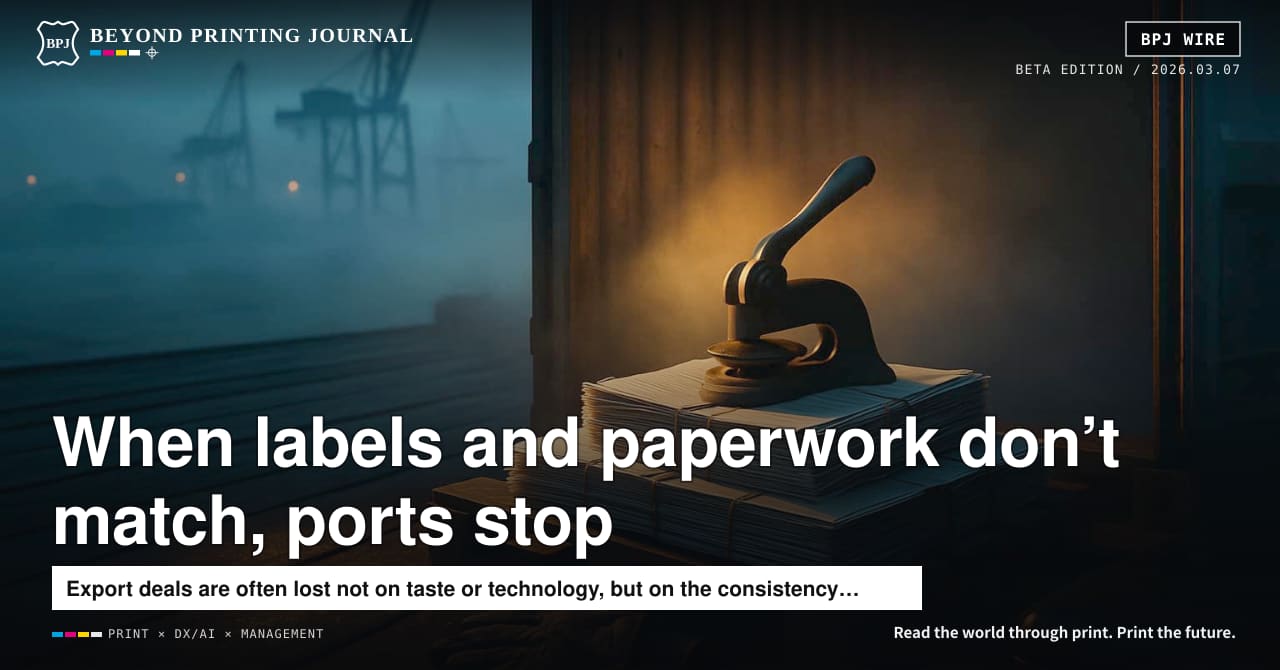
When cargo stalls at the port, the cause is not always taste or performance. It can be a few lines printed on the outside of the carton—and a single sheet of instructions packed inside. And if the wording on those materials doesn’t line up with the customs paperwork, a port stops being “a place where it doesn’t sell” and becomes “a place where it doesn’t move.”…
The rest is for members
Read the full article. Our feature reports also carry an archive-grade one-page brief (BPJ VISUAL BRIEF) — every figure with its source.
Already a member? Log in
Sources
- 欧州委員会(European Commission)ニュース / 2026-03-09
- 欧州委員会(European Commission)プレスリリースPDF / 2026-03-05
- 米国FDA(Food and Drug Administration)
- 米国FDA(CPG)
- ImportRefusal.com(民間サイト/一次はFDAデータ)
- 農林水産省 / 2024-03-26
- 日本小売業協会ガイドライン
- JETRO(日本貿易振興機構) / 2025-05-27
- JETRO(食品グローバル・ゲートウェイ案件資料PDF)
- 韓国 食品医薬品安全処(MFDS) / 2012-08-01
- 米商務省 International Trade Administration(trade.gov)
- EUR-Lex(EU法令データベース)
- ラベルバンク(Label Bank)
Beyond Printing Journal — read the world through print, and print the future.