SHEIN’s IPO paperwork reveals what “45.6% fulfillment” really means
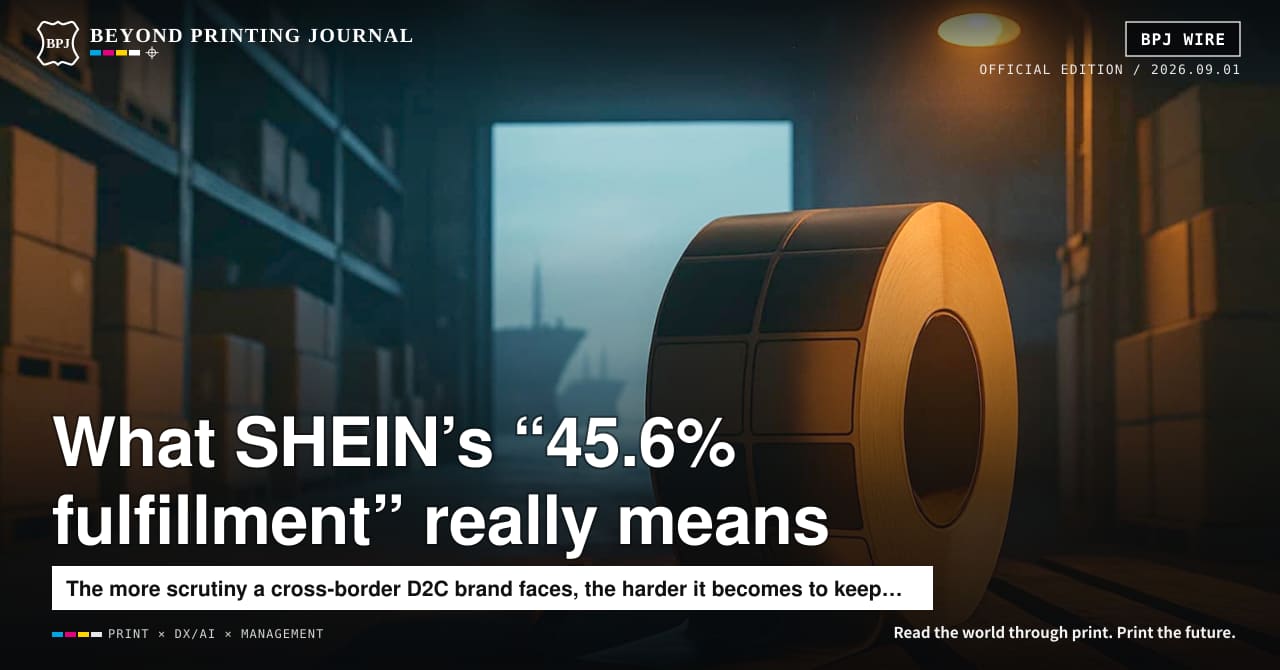
The more scrutiny a cross-border D2C brand faces, the harder it becomes to keep “paper and labels” in-house. So what should printers sell as operations—and what should they design as materials?
Reading SHEIN’s prospectus, you can see the profit-and-risk center of gravity shifting away from “advertising” and toward “fulfillment.” As IPO scrutiny rises, the “operations” behind returns, labeling, customs, and packaging quality are forced into numbers—and small shop-floor mistakes become big investor-facing risks. The result: paper, labels, and inserts get reorganized not as “printed matter,” but as outsourceable operations that can stand up to audits.
Gathered with AI. Thought through on the shop floor. Written for the future of print.
BPJ WIRE: stories selected and drafted by the BPJ desk from world news, fact-checked against the source ledger — published alongside the editor's own picks.
Translated from Japanese by AI. The Japanese original is authoritative.
Open SHEIN’s prospectus PDF on the Hong Kong Stock Exchange (HKEX) site and you don’t get the feeling of turning paper pages. There’s a search box. There are page numbers. You can jump by link.
Still, paper doesn’t disappear from cross-border D2C. What disappears is the paper handed to investors. What remains is the paper that goes inside the box—and the paper that gets stuck outside the box (the label). Investors may read a PDF, but mistakes happen on the warehouse…
The rest is for members
Read the full article. Our feature reports also carry an archive-grade one-page brief (BPJ VISUAL BRIEF) — every figure with its source.
Already a member? Log in
Sources
Beyond Printing Journal — read the world through print, and print the future.