When logs break your defenses: What RubyGems’ “407 keys” teaches print shops about designing AI that can be stopped
The more you connect estimating, intake, purchasing, and proofing by API, the bigger the automation payoff. But how do you stop an incident—can you sell “permissions,” “audit logs,” and “stop conditions” as operational quality?
The faster work gets with API integrations, the harder it becomes to stop safely. The twist is that leakage risk often shows up in “logs” before it shows up in permissions. Using RubyGems’ repeated incidents as a case study, we look at how printing companies can design for stopping—and turn that design into something they can sell.
Gathered with AI. Thought through on the shop floor. Written for the future of print.
BPJ WIRE: stories selected and drafted by the BPJ desk from world news, fact-checked against the source ledger — published alongside the editor's own picks.
Translated from Japanese by AI. The Japanese original is authoritative.
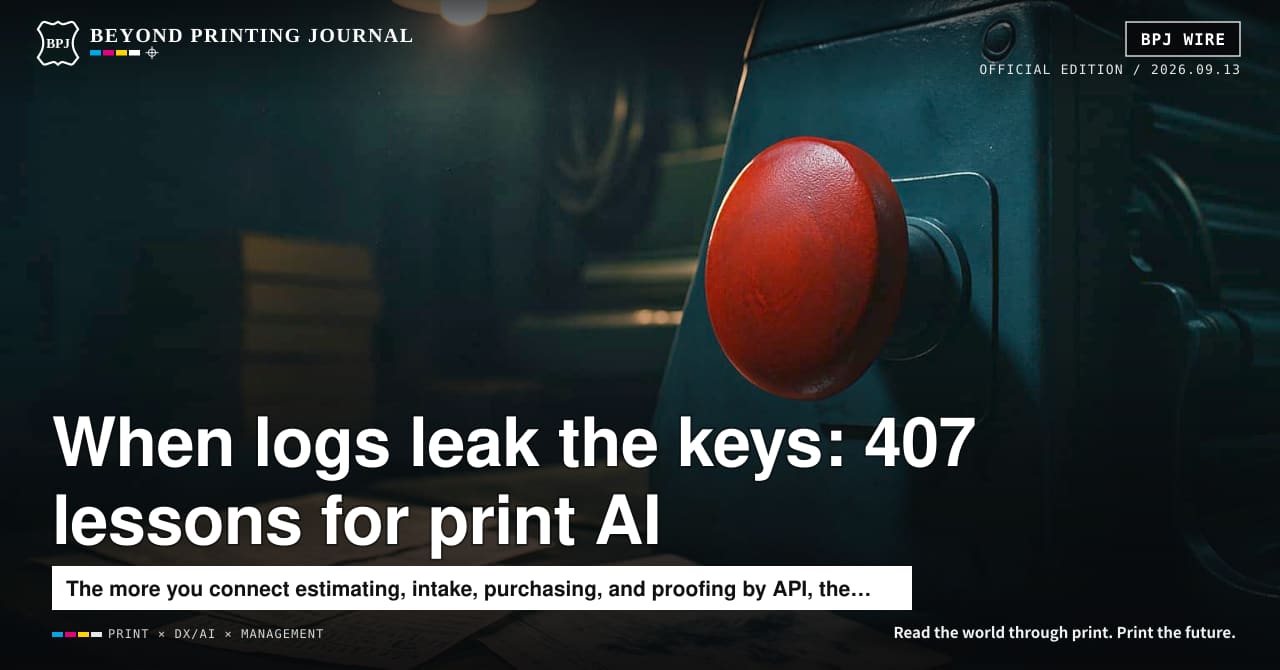
As API integrations multiply, the feel of the workplace changes. Sales answers quotes faster. Production shortens intake checks. Purchasing flows more smoothly. But the moment things speed up, you get asked a different question: how do you stop. You have more places where you can stop—and you now need to explain afterward why you stopped.…
The rest is for members
Read the full article. Our feature reports also carry an archive-grade one-page brief (BPJ VISUAL BRIEF) — every figure with its source.
Already a member? Log in
Sources
Beyond Printing Journal — read the world through print, and print the future.